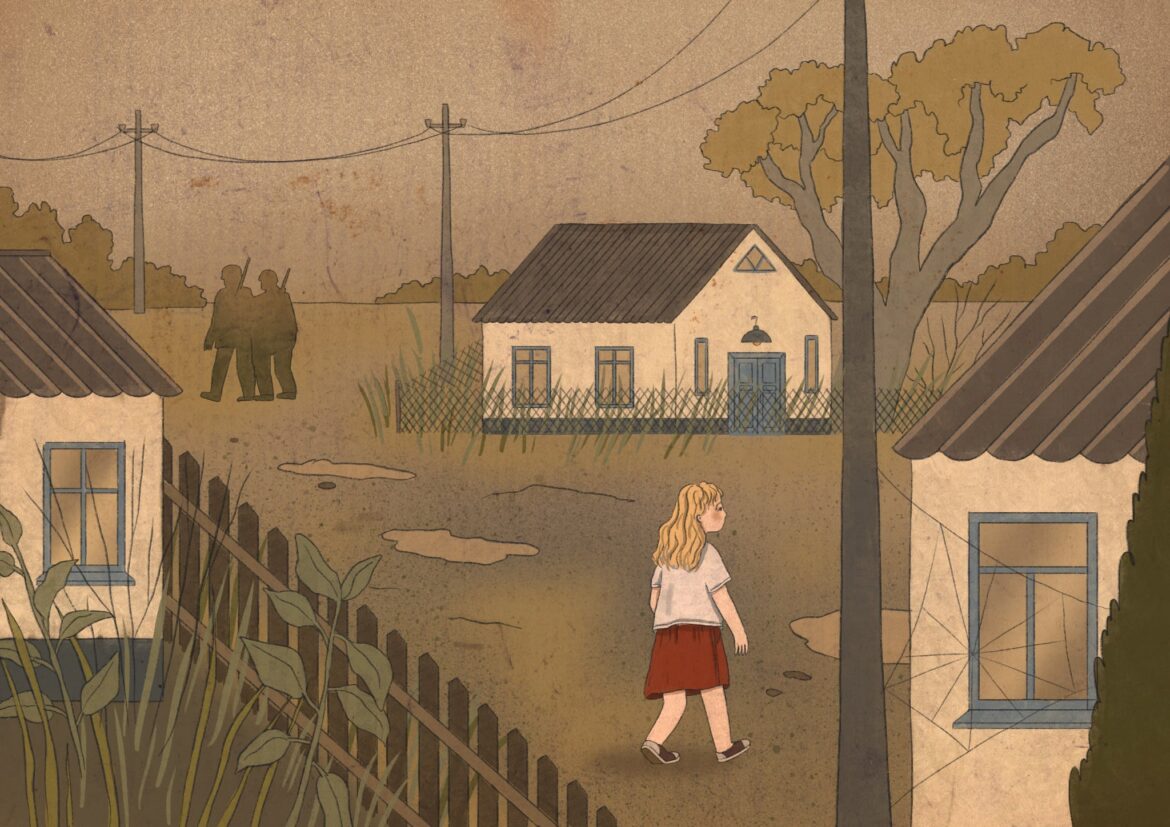
Olena (name changed) is 13 years old. The girl was born and lived in a village on the left bank of the Kherson region, which has been under Russian occupation for the fifth year. Her parents did not take proper care of her, so she was raised by her aunt. In the summer of 2024, the aunt was killed by a drone strike, and in a single moment Olena was left without care. Only thanks to the timely response of neighbours, teachers, concerned people and volunteers was the girl evacuated to Ukraine.
Had this not happened, Olena would have had every chance of ending up in Russia’s database of orphans, and from there — under guardianship or adopted into a Russian family, where she would have been raised as a Russian.
Ukraine has confirmation that 386 children were adopted by Russian families
According to Dmytro Lubinets, the Ukrainian Parliament Commissioner for Human Rights, as of autumn 2026, 386 deported Ukrainian children had been adopted by Russian families. “It has been established that they were placed in Russian families, and either an adoption procedure has been initiated for them or the adoption procedure has been completed,” the ombudsman said. Under international law, such actions by the Russian authorities could violate international humanitarian law, which requires all evacuation of children to be only temporary.
On March 17, 2023, an international court in The Hague issued international arrest warrants for Russian President Vladimir Putin and Russia’s Commissioner for Children’s Rights, Maria Lvova-Belova. They are suspected of the unlawful forcible transfer of Ukrainian children.
According to the Ukrainian government, 1.6 million Ukrainian children remain under Russian control. They include those who have been deported and forcibly transferred, as well as those who remain in temporarily occupied territory with their families. Over four and a half years, only 2,651 of them have been returned from deportation, forcible transfer or occupation.
After occupying parts of Ukraine’s southern and eastern regions, Russia forced Ukrainians in the occupied territories to obtain Russian passports and is doing everything to erase Ukrainian identity, including among children. At the same time, minors who for various reasons are left without care are entered into the federal database of orphaned children, “Usynovlenie-ru.” They may be placed under temporary guardianship or adopted by Russian families. According to Russia’s Ministry of Education, more than 90% of all orphans in Russia live this way.
Unofficial guardianship
In Ukraine, Olena was found by a large family — she became the ninth child in one of the family-type children’s homes. Oksana (name changed), Olena’s foster mother, says that under occupation the girl was raised by her aunt, a relative of her father. She has a mother, but she had long ago given up her daughter. Her father abused alcohol and showed no interest in the child, so although the aunt was elderly, she took Olena in. They lived in the aunt’s house — the two of them on one pension.
Russian troops occupied the village in the first days of the full-scale invasion. The small family couldn’t make up their minds to leave the occupied area and due to war didn’t have possibility to issue all required documents. to .
The aunt was afraid that if they tried to leave the occupation, the Russians would take the girl to an orphanage. “She told relatives, if rashists (Russians) don’t take her away and I make it to the Ukrainian side, then the Ukrainian side [will take her]. For some reason, she thought the Ukrainian side would take the child away from her because she was already elderly,” Oksana explained.
The woman decided to hide with the child under occupation while waiting for the territory to be liberated by the Armed Forces of Ukraine. For a long time, she refused to take a Russian passport, but eventually obtained one. “You and I won’t survive on our Ukrainian pension. And even if we starve to death, no one will appreciate our patriotism,” she explained her decision to Olena.
 “She thought she would save the child, but instead she lost her own life”
For a long time, Olena did not talk about how her aunt died. One day, she and Oksana were walking together when the girl put her hand to her mouth and whispered: “But my aunt was killed.” Caught off guard that the girl had started talking about it, the foster mother denied it. “But she said: ‘No, Mom, I saw it, and the women next door wouldn’t let me go there,’” Oksana says. According to the neighbors, the aunt’s body was so badly torn apart that there was nothing to bury.
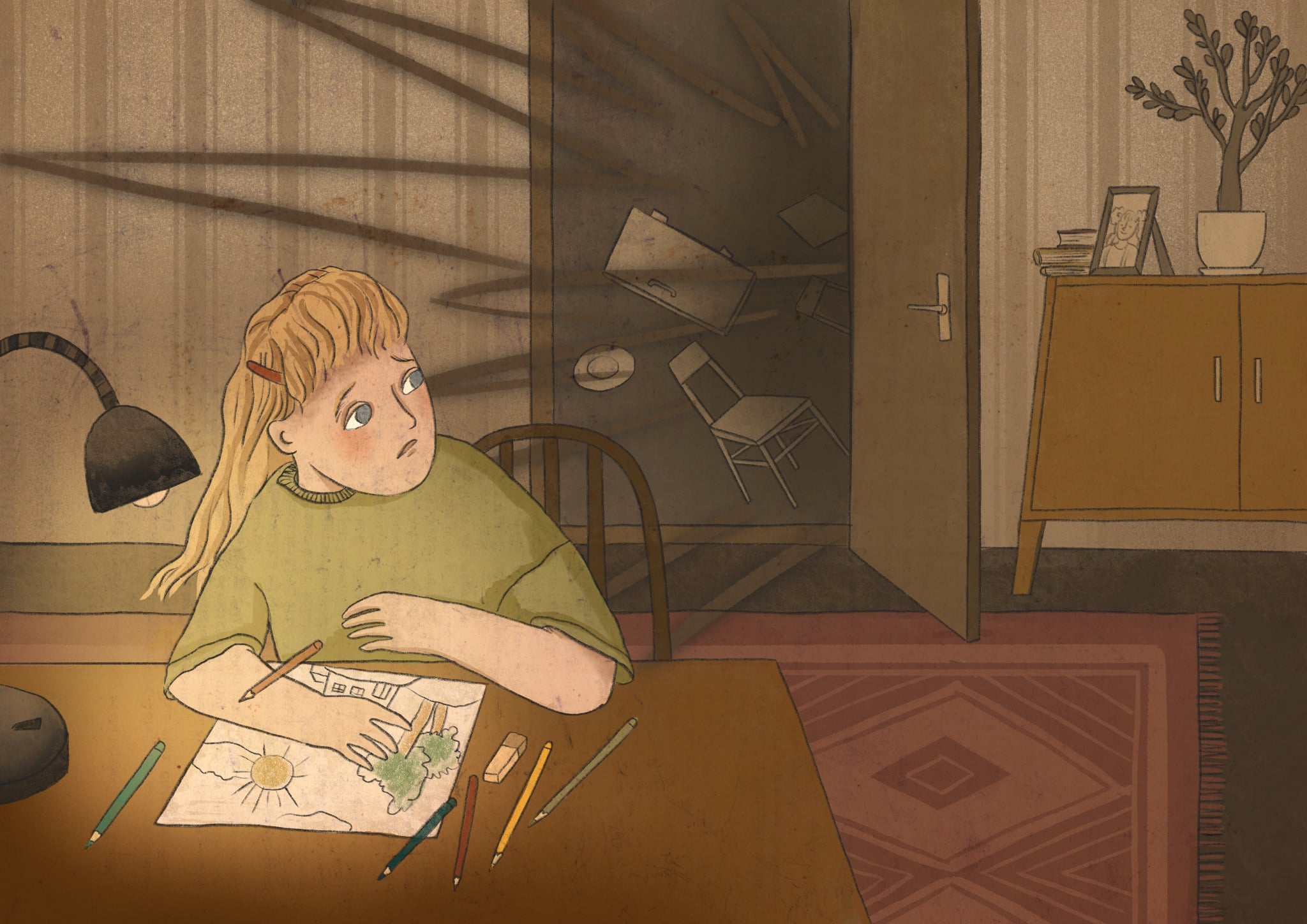
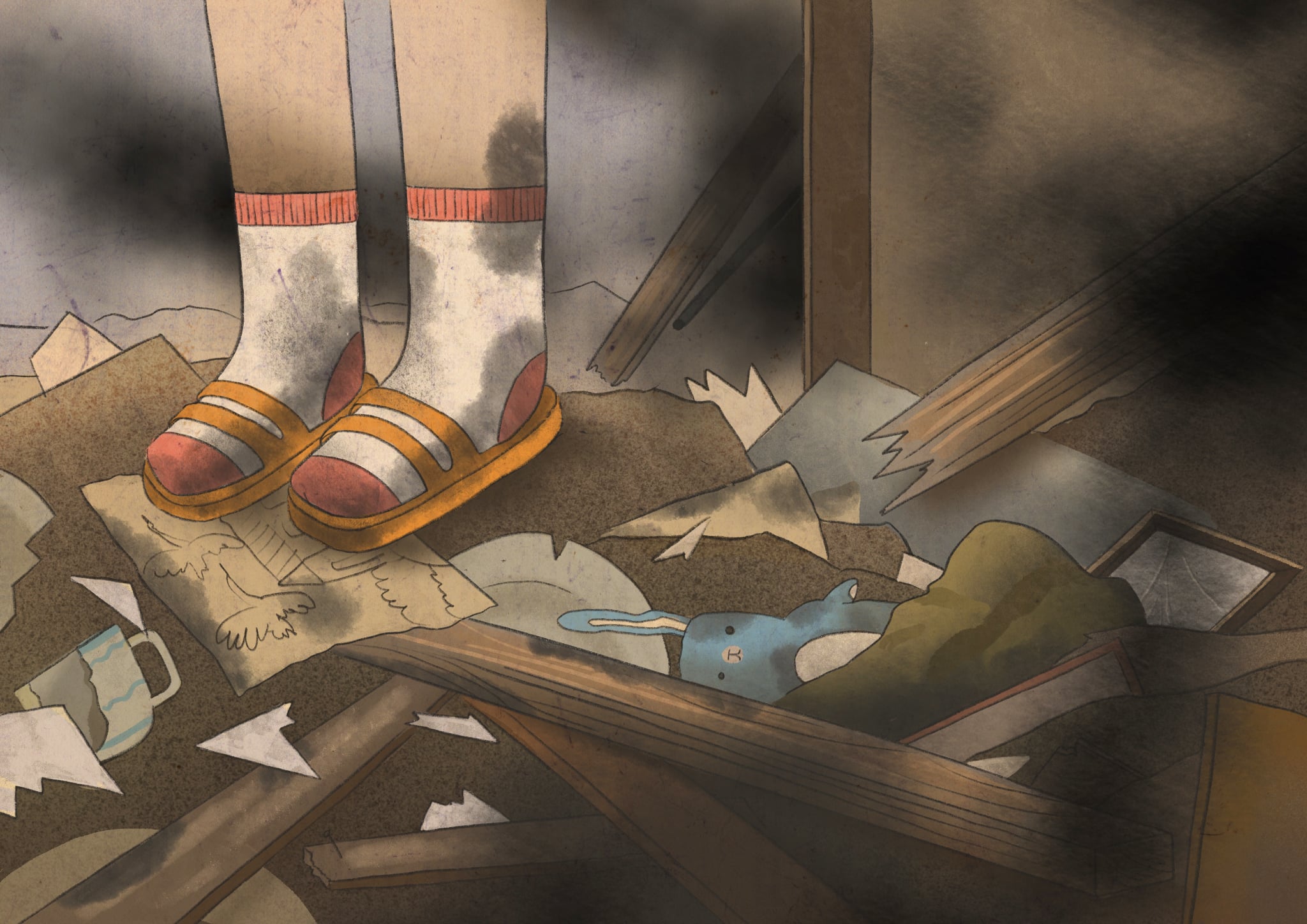
Olena said that her aunt was killed as she was leaving the room. At that moment, the girl was sitting at the table and drawing. “She says everything became dusty, everything turned white. And she says she fixated on that, her attention focused on the fact that she herself was all covered in white dust. And that her slippers had become dirty like that,” the foster mother recounts the girl’s words.
Olena remembers running down the street looking for people. It was not easy to find anyone because many residents had left. Someone among the locals hid her from Russian soldiers and informed educators in Ukraine about what had happened. They notified volunteers, and Olena was eventually taken out of the occupied territory.
After recovering from her arrival, Olena gradually began talking about her tenth and eleventh years of life under occupation. Her aunt did not allow her to go outside because armed Russian soldiers walked through the streets. Then came the first strike, which destroyed their home and forced them to move into relatives’ house. After some time, it too was damaged as a result of shelling. The aunt and Olena moved to another village, and because of constant shelling they had to spend more and more time living in a basement. This continued until the final strike, which killed the aunt.
“She thought she would save the child, but instead she lost her own life,” the foster mother says.
 “The family is mentally close to her; the child will be well there”
The principal of the school where Olena studies, as soon as she learned that Russian soldiers were abducting teachers, interrogating and torturing them if they refused to cooperate, left the occupied territory as quickly as possible. In government-controlled territory, she continued to work as the head of the relocated school online.
“The aunt was the person who submitted an application to our school so that the girl could study. The child is very intelligent, she completed her assignments diligently and took her studies very seriously,” the principal says. After leaving the occupied territory, Olena continued studying at the same school and even received a certificate of merit at the end of the school year.
“I spoke with the family that took the girl in and understood that this family is mentally close to her and that the child will be well there. Importantly, she will preserve her Ukrainian identity,” the principal says.
More than two years have passed, but Olena still recalls what she experienced in the village only in fragments. The circumstances forced her to grow up, and she seems much older, Oksana says.
The foster mother stays in contact with residents of the village who remained under occupation. They said that the girl’s father was wounded after she had already left. Her biological mother remains in the same village with her preschool-age brother.
On September 28, 2026, the Council of the European Union expanded its sanctions lists, adding 10 individuals and 17 organizations responsible for the deportation, forcible transfer, indoctrination and militarized education of Ukrainian children. Among them are the president of Tatarstan, occupation officials, including the so-called “ministers of education,” and heads of children’s institutions. The list also includes Songdowon International Children’s Camp — a state institution in the Democratic People’s Republic of Korea.
* Names of characters were changed due to security reasons
Author: Lesia Pinyak, artwork: Mar’iana Mikitiuk
The text was created in collaboration with The Reckoning Project, a global team of journalists and lawyers documenting, publicising, and building cases of atrocity crimes.